


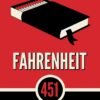

Price: $17.00 - $9.05
(as of Aug 07, 2025 08:06:57 UTC – Details)
Nearly seventy years after its original publication, Ray Bradbury’s internationally acclaimed novel Fahrenheit 451 stands as a classic of world literature set in a bleak, dystopian future. Today its message has grown more relevant than ever before.
Guy Montag is a fireman. His job is to destroy the most illegal of commodities, the printed book, along with the houses in which they are hidden. Montag never questions the destruction and ruin his actions produce, returning each day to his bland life and wife, Mildred, who spends all day with her television “family.” But when he meets an eccentric young neighbor, Clarisse, who introduces him to a past where people didn’t live in fear and to a present where one sees the world through the ideas in books instead of the mindless chatter of television, Montag begins to question everything he has ever known.
From the Publisher


ASIN : 1451673310
Publisher : Simon & Schuster
Publication date : January 10, 2012
Edition : Reissue
Language : English
Print length : 249 pages
ISBN-10 : 9781451673319
ISBN-13 : 978-1451673319
Item Weight : 2.31 pounds
Reading age : 15+ years, from customers
Dimensions : 5.5 x 0.8 x 8.44 inches
Lexile measure : 890L
Best Sellers Rank: #20 in Books (See Top 100 in Books) #1 in Classic American Literature #1 in Classic Literature & Fiction #13 in Literary Fiction (Books)
Customer Reviews: 4.6 4.6 out of 5 stars 56,381 ratings var dpAcrHasRegisteredArcLinkClickAction; P.when(‘A’, ‘ready’).execute(function(A) { if (dpAcrHasRegisteredArcLinkClickAction !== true) { dpAcrHasRegisteredArcLinkClickAction = true; A.declarative( ‘acrLink-click-metrics’, ‘click’, { “allowLinkDefault”: true }, function (event) { if (window.ue) { ue.count(“acrLinkClickCount”, (ue.count(“acrLinkClickCount”) || 0) + 1); } } ); } }); P.when(‘A’, ‘cf’).execute(function(A) { A.declarative(‘acrStarsLink-click-metrics’, ‘click’, { “allowLinkDefault” : true }, function(event){ if(window.ue) { ue.count(“acrStarsLinkWithPopoverClickCount”, (ue.count(“acrStarsLinkWithPopoverClickCount”) || 0) + 1); } }); });
Customers say
Customers find the book wonderfully written and highly relevant to today’s culture, with a brilliant and prophetic dystopian narrative. Moreover, they appreciate its educational value, with lessons that are telling, and consider it good value for money, noting it saves both money and trees. However, the plot receives mixed reactions – while some praise its many plot twists, others find the story unsatisfactory. Additionally, customers disagree on the pacing, with some finding it quick-paced while others say it’s hard to get into. Several customers describe the book as boring and depressing.








Kevin Walrath –
Review from Contrary World blog (the premier source for all things dystopian)
Fahrenheit 451 is one of my all time favorites. It’s written in the third person, placing you into the shoes of an objective narrator who has special access to the thoughts and world view of the characters within the book, especially that of the protagonist. The protagonist (Guy Montag) actually begins the story as a sort of villain really. His profession is that of a future based fireman, who don’t really put out fires like they used to. In fact, they professionally start fires. What a clever twist on Bradbury’s part.These firemen are sanctioned by what one can only conclude to be a dystopian government to burn books, as well as the houses they are contained within. In this future world, the government has deemed books as dangerous, containing ideas that run counter to the narrative they wish to form and broadcast via televisions that cover entire walls within people’s homes. And the people want this, as they feel more comfortable with their government fed information. How dystopian indeed.Reminds one of the behavior of the Roman Catholic Church during the Dark Ages. The two have book burning in common, as well as burning Bibles (in the case of the RCC, Bibles that didn’t subscribe to their criteria – even though they came from source material originating from the same authors). No offense to Catholics – some Protestant sects weren’t much better (like the early Anglicans who destroyed much of the Church’s property, including relics, as did Orthodox Christians during the Iconoclast Era).Montag takes quite apparent joy in his job, causing a smile to overcome his face every time he gets to burn those devilish books. That is, until he becomes intrigued by a young neighbor girl named Clarisse. Clarisse is a female character that many feminists sadly overlook as to her importance in the overall arc of the story. Good on Bradbury for taking this approach, as you know what they say – “behind every great man, there’s an even greater woman”. This doesn’t always have to imply a spouse, mind you, and Bradbury exploited this fact while using Montag’s lame wife as a great contrast.Clarisse is somehow able to tap into Montag’s emotional capacity to better understand what exactly his job is harming, and how his otherwise dull life (including dull wife who serves as a great example of the brainwashed zombie like people of his society) could become so much more enriched by. This confrontation with not only Clarisse – but himself – causes a sort of psychosis for our villainous protagonist. And thus begins his character development that makes the book really begin to take off and hook the reader into the protagonist’s story arc and growth.At first, Montag struggles with his newfound understanding of the profound beauty of books. He is intrigued by the sense of wonder, emotion, and timelessness that books have to offer compared to the mind numbing talking heads that rule the day (sounds similar to our times with all the political talking heads telling how people should think, unlike books that allow people to draw their own conclusions). Yet he is still skeptical, resisting this newfound understanding as he continues in his line of work.He challenges the notion of books being a net positive for society along the way, including challenging protectors of books along the way. All of this amidst some unknown war going on in the background of the story that is never really described in much detail. I assume that Bradbury himself had assumed (living in the days of the Cold War between the US and the USSR) that some kind of war of that magnitude coming to fruition was sadly somewhat inevitable.As his change of heart is occurring, he struggles with his chief named Beatty (the antagonist of the story). Beatty is a walking contradiction, as he is full of knowledge pertaining to the books they burn. He is so well versed in their content by heart, yet seeks to eliminate books from existence on behalf of the government.Unlike Montag who simply found pleasure in his destructive line of work, Beatty knows full well every reason and intention as to why they do and takes pleasure in doing so. This, all while being so well versed in the knowledge and insights contained within them. He overall sees them as dangerous, yet behaves as if the type of knowledge contained within books should be reserved for elites rather than the average citizen. This antagonist displays the kind of pretentious attitude that perfectly captures what it means to convey the notion of a dystopian society within a book of this genre.After trials and tribulations in his struggle, Montag reaches a point where he is so moved by the message of a particular book, that he even steals it so that he can preserve it himself. As a Christian myself, I personally loved that this book just so happened to be a Bible. Why does Montag take such a personal infatuation with the Bible?It may be that Montag’s society is so lost that when bombs begin to fall toward the end, whatever Montag had read might help him and others rebuild society for the better. After all, the Bible is full of advice, and provides direction for moral and ethical enrichment. Certainly a new society would need guidelines to rebuild and improve over mistakes made in the past.Montag refers to the book of Job at one point in the story, as well as references made about Caanan. At the end, Montag even tries to recall parts of the books of Ecclesiastes and Revelation. The book of Revelation itself (arguably my favorite book of the Bible – I’m a fan of the dystopian genre after all) deals with the end of times. Although, perhaps Montag failed to recall this as quickly as he might because they are preparing to start a new life when the world appears to be ending.The novel ends with Montag escaping the city in the midst of this new war. He escapes deep into the countryside, meeting a band of roving intellectuals who have elected to preserve significant works of literature in their memory. Reminds me of the Vaudois, the Waldenses and the Albigenses who preserved the original books of scripture in spite of the persecution they suffered from the RCC.Not long after these roving intellectuals welcome Montag into their community, an atomic bomb falls on the city and reduces it to rubble. The next morning Montag leads the men on foot back toward the city with rebuilding in mind. The novel’s conclusion functions to bring the prevalent violence to its logical conclusion, which is that violence infiltrates nearly every aspect of the world our protagonist finds himself in.The firemen violently destroy people’s property and lives. Television displays gruesome, desensitizing violence for viewers’ entertainment. Pedestrians regularly get trampled by speeding vehicles. Finally, war takes these forms of violence to a new extreme, destroying society and its infrastructure altogether. The novel’s ending depicts the inevitable self-destruction of such an oppressive society in such an effective, and rather melancholy fashion.As stated in the beginning of the Fahrenheit 451 book review, this book is one of my all time favorites. It’s no wonder as to why I give it a 5/5 rating. Bradbury’s use of language is lyrical, yet not overly forceful. He paints a picture of a world in which we as a society should wish to avoid – in a multifaceted way.When it comes to dystopian books, this is truly a classic – and for good reason. Not only was it tremendous back in its heyday; it has stood the test of time, proving to be of use to us nearly 70 years later. I absolutely love Fahrenheit 451, and I believe you would too if you love dystopian fiction and have happened to somehow not have read it yet (it happens – later is better than never though!).
Bob Magnant –
In Defense of Digital Books
An awareness of a film remake of Fahrenheit 451 got me digging into this story once again; it was written 65 years ago when I was in the 6th grade and books said it all! Bradbury said that this was the only science fiction book he had ever done and that it was based on reality, what he described as ‘the art of the possible’. I couldn’t remember from the first time I read it how he had dealt with the ideas of book burning and discontent so I went back and reread his original so that I might get to the heart of digital books today.This 1953 novel emerged from his concerns over the threats of the McCarthy era and the historical role that book burnings have played in suppressing dissenting ideas. It describes the dehumanizing of a society where books are outlawed because of the disagreement that they spread. The job of censoring these works and destroying such knowledge was that of the firemen who would burn them. It is considered one of his best works. At the time, he described it as a commentary on how mass media may reduce interest in the reading of literature. The 60th Anniversary Edition of ‘Fahrenheit 451’ was an exciting find for me because in it the original story is supplemented with an assortment of commentary from other admirers and from Bradbury himself.Books were only one type of receptacle where we stored a lot of things we were afraid we might forget. There is nothing magical in them, at all. The magic is only in what books say, how they stitched the patches of the universe together into one garment for us. — Ray Bradbury,Guy Montag is the main character, who has been a fireman for ten years. The story’s focus is on his questioning of his inner thoughts and the dialogue that he is having, or doesn’t have, with his boss Captain Beatty, his wife Mildred, his intriguing and now missing neighbor, Clarisse McClellan, his new-found friend Faber, a retired English professor, and ‘five old men’ that surfaced. Two other items bring their unique coloring to the story, the Salamander fire trucks, complete with fire throwers, and the Mechanical Hounds.I was delighted with Neil Geiman’s Introduction; his words reaffirm the timelessness that the story brought to me. I was born between Bradbury (1920) and Geiman (1960) and I went back to reread the book, already questioning how a story that was written in the past about the future could truly hold up for today’s generation in a world that’s already been dramatically shaped by time and technology in ways that they weren’t even aware of. In he 1950’s, Bradbury already saw computers possibilities in simple terms and saw that nothing but good would be coming from them. He believed that, in a sense, computers were simply books, were all over the place and that computers would be as well.A familiarity exists in the conversations and the silences of the story that is easily recognized as the firemen discuss their work, their lives and the complexities of their relationships; those surroundings seem timeless. The images of Mildred’s ‘family’ in the parlor are quite similar to the multiscreen environments that typically surround us today. Look around you; computers and smartphones count! The relationships that we still have with books goes without saying; they’ve been with us for centuries. The idea that all books could become criminal has always been an absurdity to the masses but the historical role that book burning has played as a means deleting or controlling differences and dissidents is real. ‘Fahrenheit 451’ is a novel first, a fiction, a story about a dedicated fireman, Montag, who believes that all books cause conflicting ideas and must be destroyed. He is part of a zealous effort to purge their existence from society. After meeting Clarisse, he begins to question how his beliefs have been shaped and his curiosity inspires his quest for meaning in words. By story’s end he has become the revolution and a hero for the future of books… just like Bradbury!!I was struck by Bradbury’s comments in Coda (1979) of how he waged a lifelong battle with well-intentioned readers or the actions of cubby-hole editors, fearful of contaminating the young, blatantly changing his words or suggesting that he do. In one instance, he discovered that, bit-by-bit, some seventy-five separate section had been censured from Fahrenheit, causing the entire book to be reset. His point should be obvious; there is more than one way to burn a book and the world is full of people running about with lit matches!This book contains an unprecedented collection of timely wisdom from noted experts from the world of words just in time to bolster my efforts to promote storytelling in today’s younger generation, not the least of these are from Bradbury’s own perspectives.Bob Magnant created the Fingertips Series on iTunes to promote the reading, writing and reviewing of books in the digital age. He has written multiple Apple iBooks and is the author of ‘Domestic Satellite: An FCC Giant Step’ and ‘The Last Transition…’, a fact-based novel about Iran. He writes about politics, globalization, the Internet and US policy and lives near the beach in Jupiter, FL.
Özay Şen –
Ray Bradbury’nin yakın gelecekteki korkulara ilişkin kaleme aldığı baş yapıtı.
Gerard –
Quick delivery, well packed, products as displayed, very pleased!😁
Victor Gerardo –
Excelente libro, muy buena calidad y llegó muy rápido
S. Lornie –
It’s not everyday that I get easily sucked into a book to the point that I actually read the thing in one sitting. I am admittedly one of those people who struggle to read for long periods of time. But there has been a few odd occasions where my primitive little brain has a spark go off and I sit there for a few hours until I’m done. The most recent books that encouraged this behaviour was Fahrenheit 451, a book Amazon recommended after a similar quite binge of 1984.Fahrenheit 451 is a book written by Ray Bradbury. The novel was originally published in 1953 and from what I’ve read, this is generally considered his most famous and most popular book. The story is about a dystopian future where books have been completely outlawed. They have been known to bring out the worst in people by producing unhappiness and stupid behaviour. To combat this problem, the “firemen” are tasked with finding each piece of literature. When they find it, they immediately destroy it and the housing of those who owned them. We follow one of the “firemen” called Guy Montag. This poor fellow becomes disillusioned with his job after becoming friends with a young rebellious teenage girl. She encourages him to question everything, teaches him to start enjoying the simple things in life and this results in Montag committing himself to preserving all forms of literature.The plot of the book is reasonably simple and is very easy to understand. I thought Ray Bradbury did a great job making poor Guy sympathetic. The world in which he lives, it truly sounds depressing, full of mindless humanoids staring at television screens and void of uniqueness (just like 2020). The book doesn’t take long to introduce you to the important characters. Each character is quite unique and has just enough detail to help move the plot along at a very quick pace. Before you know it, everything is (literally) up in flames and the story becomes a bit of a rush.I really enjoyed the world in which Fahrenheit 451 takes place. It’s very clear that this novel could have been more in depth and it would certainly have been interesting. I would love to know more about the political structure of this version of America, as an example. With no offense to Bradbury intended, It makes me wonder what a more talented writer could do with this material. It’s a very good concept, it has great characters and a very interesting setting. It has the potential to be so much more than it is. But as good as that sounds, if we got that kind of detail, It would quite simply murder the pacing of the book. A quality I quite enjoyed. Sometimes less is more. It at least encourages us to use our imagination more. That’s never a bad thing.Fahrenheit 451 is a very easy book to read and if you’ve just read 1984 like myself, you’ll want to pick this one. It’s not quite as well written from a technical stand point as say 1984 but it’s very imaginative story that I really enjoyed. I highly recommend a copy of this book.
Dagi –
książka klejona, dość szybko złamał mi się grzbiet; sama treść nie zachwyca, ale nie jest też tragiczna